

When Did Devotion Become Cringe?
On motherhood, modern love, and the radical act of caring too much

There was a time when devotion was considered one of the highest human qualities.
To devote yourself to something, a person, a child, a craft, a god, a life, was seen as evidence of depth. Of discipline. Of love. Of meaning.
Now it’s cringe. Or at the very least, kinda just… ick.
Not universally, of course, but enough so that many of us instinctively temper our expressions of love with humor, irony, or distance. We live in a culture that deeply values self-protection. Ironically, while oversharing the facade of life on Instagram is at an all-time high, we all know that everyone is expected to remain independent enough, detached enough, self-aware enough, and emotionally guarded enough to avoid appearing naïve or consumed.
The highest social currency often belongs not to the person who loves openly, but to the person who appears least affected, has the most brand deals, and can afford all the latest treatments to prevent the visible evidence of actually living life, i.e., wrinkles, saggy necks, and not-as-tight asses included.
This is especially true for women.
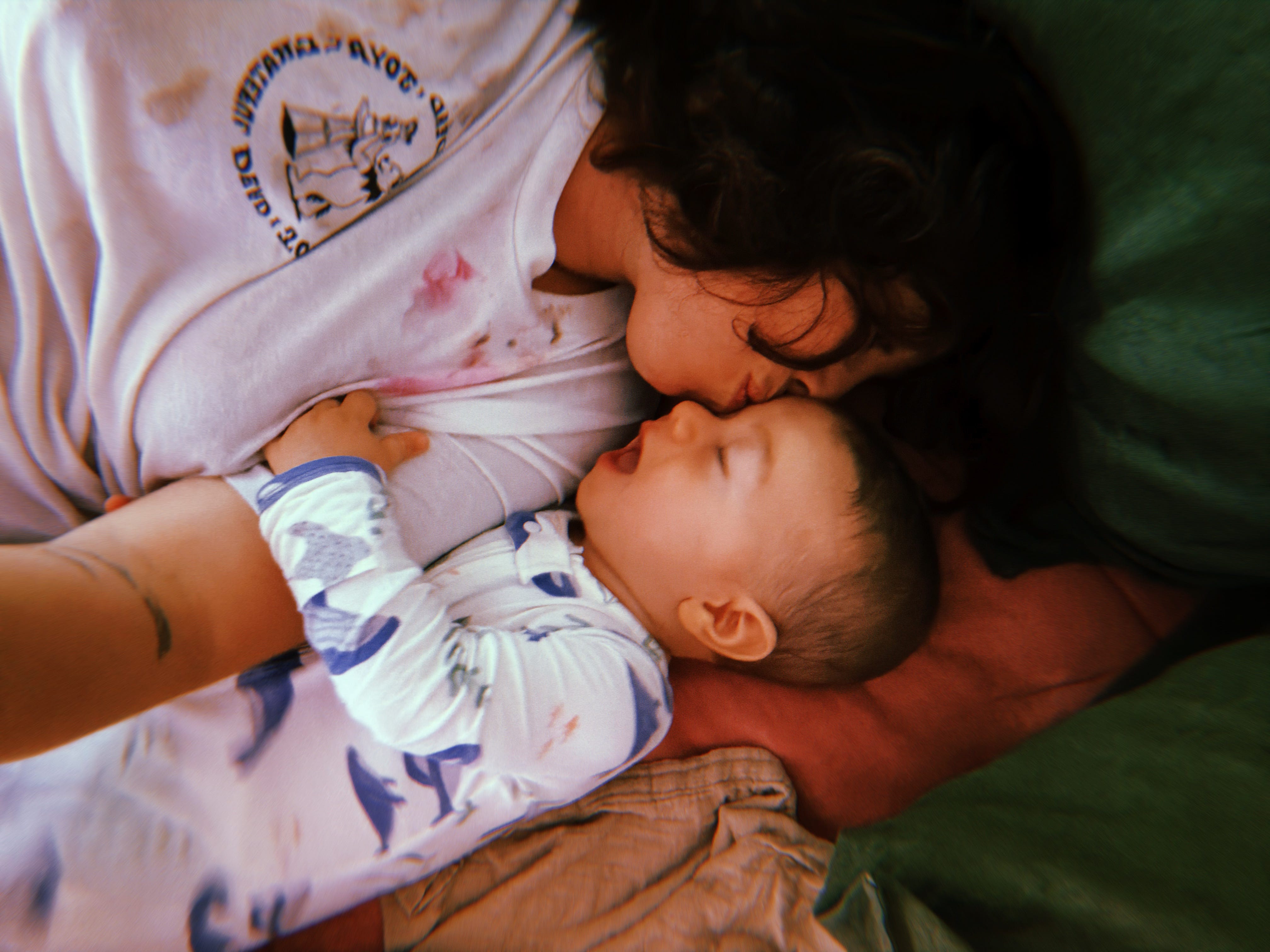
What has surprised me most about motherhood is not simply the intensity of my love for my son, but how naturally this love has reorganized my entire life. As though some ancient part of me, buried beneath years of modern conditioning about productivity, independence, ambition, image, and self-preservation, suddenly remembered what it meant to devote myself fully to something outside of myself.
And perhaps what has surprised me even more is how uncomfortable that level of devotion seems to make people. Not overtly. No one says it directly. But you can feel it in the subtle social cues, in the way modern culture rewards detachment and quietly distrusts women who appear too consumed by love.
This past year did not unfold according to the fantasy of motherhood and family life that I once imagined for myself. And yet beneath all of that complexity is another truth I cannot ignore: I have been incredibly fortunate in who I chose to have a child with. While I still grieve certain things, I also recognize that many women never receive what I have been given: the ability to truly enter motherhood instead of merely surviving it.
That distinction matters enormously.
I have been able to immerse myself in motherhood because Louis’ father has supported me and provided me with the conditions that allow me to do so. I have been given the space to orient my days around my son and to educate myself on attachment, responsiveness, co-regulation, feeding, sleep, holding, soothing, and all the repetitive invisible acts that quietly shape a child’s internal sense of safety over time.
And yes, perhaps I have become “that mother” in the process. The overly sentimental one. The parent whose phone’s camera roll is almost entirely close-ups of my son’s face against my boobs, his tiny feet, and far too many videos of absolutely “nothing” happening.
But the deeper I move into motherhood, the more I wonder whether what modern culture dismisses as cringe is often simply visible devotion.
Maybe the mental health crisis we’re experiencing today is actually because somewhere along the way, devotion itself became embarrassing.
Devotion to motherhood is framed as losing yourself. Devotion to homemaking is often interpreted as regression. Devotion to a romantic partner is treated with suspicion, as though emotional surrender itself signals weakness or a lack of self-respect. We have become so fluent in the language of self-protection that many people no longer know how to speak openly about love without inserting irony or emotional distance to protect themselves from vulnerability.
Particularly women.
And I understand why. Historically, women were often trapped inside systems of dependency that harmed them profoundly. Financial independence matters. Autonomy matters. The ability to leave unhealthy situations matters. Feminism undeniably expanded the possibilities available to women’s lives in ways that were necessary and long overdue.
But I also think some important nuance was lost in the process.
Somewhere along the way, many women absorbed the idea that openly orienting their lives around love, caregiving, domesticity, family, or partnership somehow made them less evolved than remaining perpetually independent, productive, ambitious, and emotionally self-contained. Dependency itself became humiliating. To need someone deeply became dangerous or psychologically suspect.
To visibly prioritize motherhood became something women felt compelled to apologize for or strategically balance with enough career ambition and personal branding to remain socially legible. (What a tragedy!)
Women are now expected to mother while remaining fundamentally untouched by motherhood. It’s almost as if we are allowed to have children, but not to become too changed by them. Motherhood is expected to fit neatly into an already existing identity, rather than be acknowledged for what it often is: a complete psychological, emotional, hormonal, and spiritual reorganization.
We are expected to carry children, birth children, feed children, regulate children emotionally, preserve family systems, often maintain careers simultaneously, remain desirable, ambitious, emotionally stable, financially productive, sexually available, socially relevant, physically attractive, and spiritually evolved, all while pretending none of this fundamentally alters us. If you don’t believe me, look at how we treat maternity leave, especially in the US, where in most states it isn’t offered, and when it is, it’s usually only for six weeks. Friends, it should be three years.
But motherhood is supposed to alter you.
Biologically, psychologically, and emotionally, it is designed to.
Research increasingly shows that pregnancy and early caregiving literally reshape the maternal brain. Studies have found measurable changes in regions associated with empathy, emotional attunement, vigilance, emotional processing, and bonding after childbirth. Researchers using brain imaging have observed structural changes in gray matter linked to maternal motivation, emotional regulation, and attachment in the postpartum period. See here: Proceedings of the National Academy of Sciences study on maternal brain changes
The maternal brain adapts toward connection because human infants are neurologically unfinished at birth and depend heavily upon caregiver regulation and attachment for healthy development. Other research has shown that sensitive, emotionally responsive caregiving plays a significant role in shaping infant stress regulation, emotional security, and long-term relational health. See here: NIH article on attachment and early brain development Harvard Center on the Developing Child: Serve and Return Interaction Shapes Brain Architecture
Which makes the contradictions of modern motherhood feel almost absurd.
We speak constantly about anxiety, trauma, nervous systems, emotional intelligence, and mental health while simultaneously undermining the very conditions that help create emotionally secure people in the first place.
This shift in perspective has changed the advice I now give both men and women.
Lately, I’ve found myself telling my guy friends to stop evaluating women solely through the lens of chemistry, fantasy, attraction, or status and instead ask themselves a much more consequential question: would this woman make a beautiful mother to your future children?
Not aesthetically. Emotionally.
Can she create warmth? Is she nurturing? Can she regulate herself? Can she repair after conflict? Does she create emotional safety? Because eventually, if you choose to have children, your romantic choices stop being solely about personal fulfillment and become deeply architectural. You are choosing the emotional environment your future children will inhabit every day of their lives.
Ironically, motherhood has also made me far less judgmental toward women who prioritize financial stability when choosing partners. In fact, I’ve started jokingly telling younger women to “be gold diggers,” though what I really mean is: stop apologizing for wanting a partner who can actually support the life you hope to build together with children.
Children are expensive. Pregnancy and postpartum are physically, emotionally, and psychologically consuming. Motherhood significantly impacts women’s earning trajectories and career advancement in ways that are well-documented. And despite cultural messaging that suggests women should seamlessly return to work almost immediately after childbirth, many women do not actually want that when genuinely given another option.
This does not make women weak. It does not make them anti-feminist. It means caregiving matters. Bonding matters. Attachment matters.
Children do not require perfect mothers. But they do require presence. And presence requires support. Financial support, emotional support, and TIME.
Money = Time.
Perhaps that is the conversation we should actually be having instead of endlessly arguing online about “trad wives.” Because beneath much of that discourse is a deeper collective exhaustion. Many women are tired of trying to perform endless productivity while simultaneously carrying the emotional and physical labor of caregiving. Many women are quietly longing for slowness, interdependence, family life, emotional presence, and community in a culture that increasingly treats human beings like self-managing economic units first and people second.
Perhaps what makes openly devoted mothers uncomfortable to modern culture is that we expose something many people are secretly starving for themselves. Not motherhood necessarily.
But devotion. Real devotion.
To openly love something more than your image.
To organize your life around care.
To prioritize tenderness over performance.
To admit another person has fundamentally reordered your priorities.
To surrender to love without maintaining constant ironic distance from it.
That kind of openness feels almost radical now. Maybe even ick, to some.
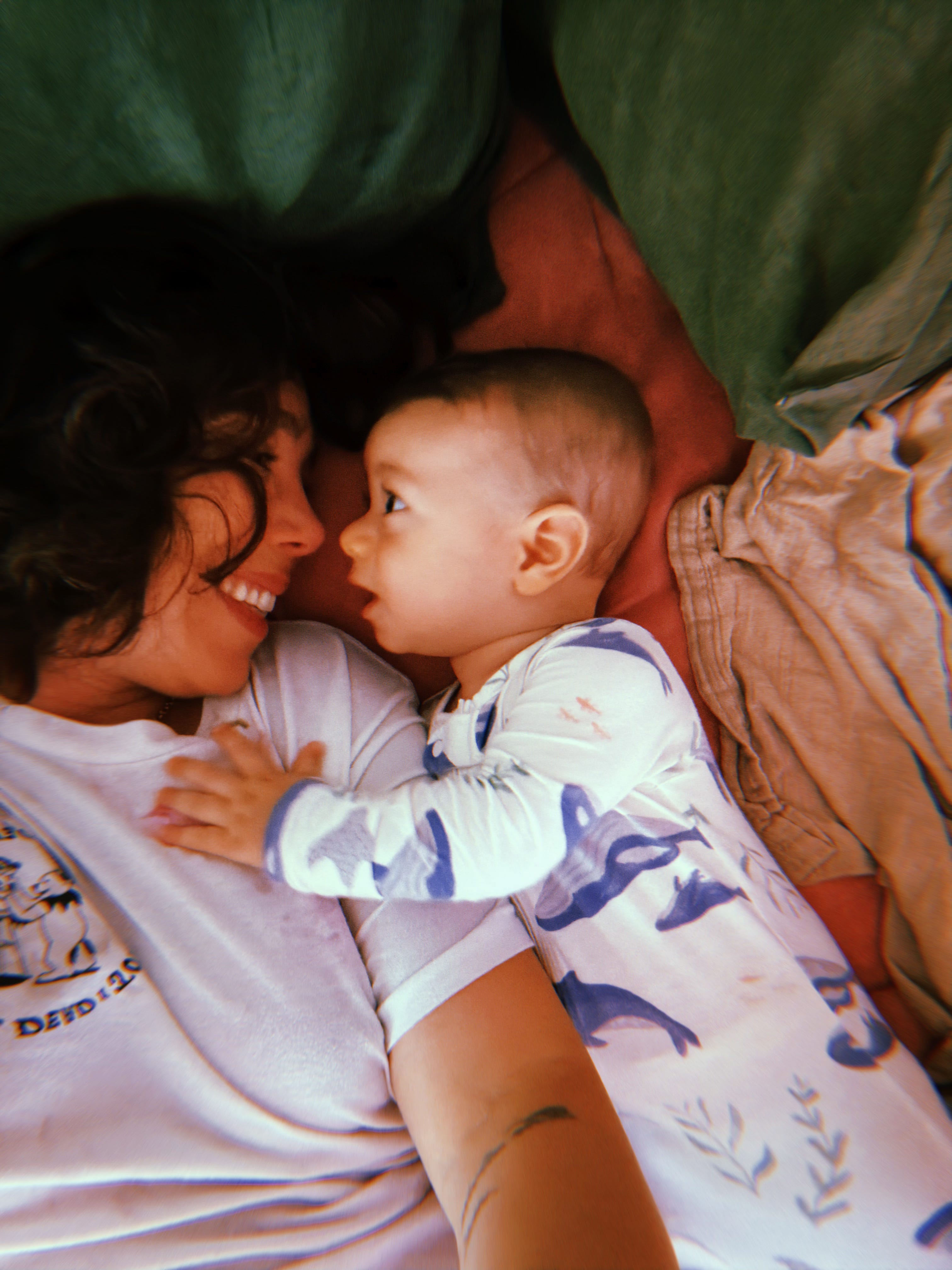
Motherhood has not made me less intelligent or less ambitious. If anything, it stripped away many of the performative layers I once mistook for identity and returned me to something far more essential: the understanding that love itself, sustained, vulnerable, repetitive, embodied love, may be one of the most psychologically and socially important forces human beings ever participate in.
And perhaps the real tragedy is not that modern mothers are “too devoted,” but that modern culture has forgotten how to revere devotion at all.
Devotedly,
Laksmi xx
This week, I’d love to hear about your relationship to devotion, where it exists in your life, where you resist it, where you long for it… and maybe we can chat about how to practice it more openly and with less shame in our daily lives.

What’s Feeding Me: Objects, Observations & Inspirations
Lately, I’ve been trying to pay closer attention to the things that pull me back toward presence and imagination. The people, places, objects, conversations, and art that remind me that life is meant to be lived, not merely optimized.
So here are a few things I’ve been loving this week:
Catching Shower Flowers by Tess Guinery and her IG feed that keeps me smiling and wishing she lived here in Topanga Canyon.
I got to visit friends in Ojai this week and had the most delightful sandwich and biscuits at Rory’s Other Place.


There’s something about Ojai that reminds me of Topanga, but with a little European village folded into the center of town. Rory’s has the most perfect baked goods and this tiny sun-drenched nook where you can linger over coffee and breakfast while quietly enjoying the company of strangers. It felt like one of those increasingly rare places that still invites people to slow down a little.
Speaking of slowing down, I loved last week’s New Moon and preparing for it with fixed candles. When I was younger and living in New York City, I used to buy my candles at Enchantments in the Lower East Side, and I only recently discovered Diasporic Magic in the Valley, right off Ventura near Topanga Canyon Boulevard.
Zohare, the owner and founder of Jewitches, has created a true haven for exploring all things mystical, magical, and deeply human. The space feels less like a store and more like a real apothecary, and more importantly, like an invitation to reconnect with ritual, intuition, and wonder, and she’s honestly a badass high priestess with a heart of gold. I instantly felt like we were kindred spirits, and I am hoping to collaborate with her soon on something special for my in-person Boobs Out! Mama Circle.